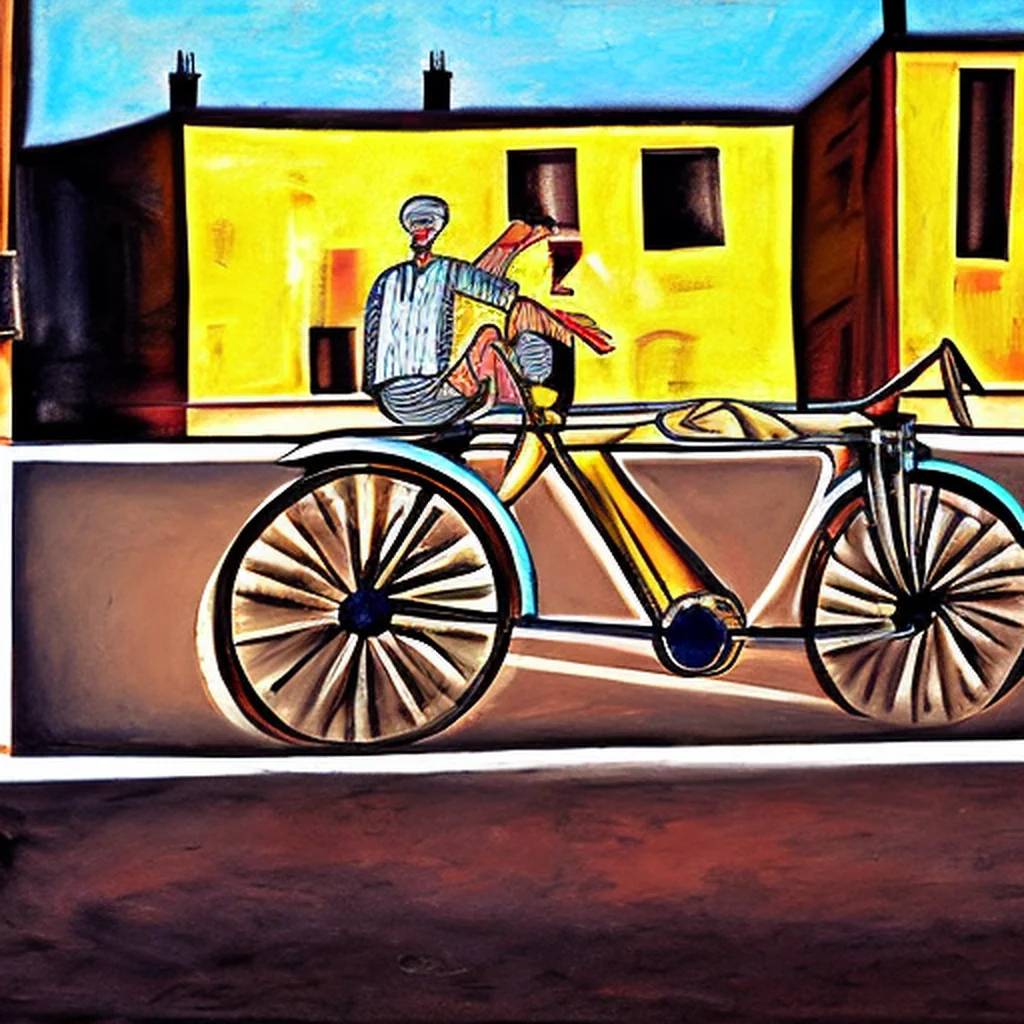
This period marked the dawn of my bicycle journey. I was a young boy then, and my first bicycle was a simple, sturdy, and reliable two-wheeler. It was a gift from my father, a man who understood the value of a bicycle. It was a symbol of freedom and independence, a gateway to adventure and exploration.
The story of my life is a story of resilience and adaptation. I have seen India change dramatically over the decades. I have witnessed the rise of the Indian middle class, the growth of the IT sector, and the changing face of Indian society. I have been fortunate to have a good education and a supportive family.
I remember the bicycle was a symbol of his success and status. My father was a government employee and my mother was a homemaker. We lived in a modest house in a middle-class neighborhood. We had a small garden where we grew vegetables. We were a close-knit family, and we enjoyed simple pleasures like playing board games and reading together.
The bicycle was a beautiful, sturdy, and reliable machine. It had a strong frame, a comfortable saddle, and a sturdy chain. It was a marvel of engineering, a testament to the ingenuity of the Sen Raleigh brand. It was a symbol of freedom and independence for a young girl like me. I remember vividly the first time I rode it. I was nervous, but excited.
They would bring along their own picnic baskets, and they would have a feast of mangoes and guavas. The town was known for its delicious mangoes and guavas. The town’s reputation for these fruits was so strong that people from other towns would come to buy them.
An annual night picnic was on the full moon night in autumn called ‘Sharad Poornima’. The picnic was held in a huge park around a lake outside the town and around hundred groups came for it. The belief was that milk heated exposed to the moon was very medicinal and healthy. For us it was a night picnic with hot sweet milk with cardamom etc. along with hot samosas cooked in the picnic spot. All the stuff was carried on bicycles. Bicycle Mechanics Indore had bicycle repair shops in almost every locality. Because it was a working class town, the bicycles were well maintained by the owners and the mechanics were also good. We children could watch them for hours with utter fascination and thereby learned a lot. Thus we learned that before you check for puncture, check for the possible leak in the valve tube and change it. It saves a lot of hassle of going through the elaborate procedure of removing the air from the tube, loosening the tyre, removing the tube and so on.
The process was meticulous and precise, a testament to the bicycle’s intricate design and the skill of the mechanic. The mechanic’s expertise was evident in every step of the overhauling process. He meticulously inspected each component, ensuring that everything was in perfect working order. He replaced worn-out parts with new ones, and he adjusted the components to ensure optimal performance.
* **Kharagpur (1961-68):** A period of significant change and growth for the town. * **Transportation:** Walking and cycling were the primary modes of transportation. Two-wheelers were rare, and cars were scarce. * **Population:** Kharagpur had a population of less than 20,000.
This is a stark example of the desperation that gripped the region during the famine. It highlights the lengths to which people would go to survive, even if it meant breaking the law. The famine was a complex issue with multiple contributing factors. One of the most significant was the lack of adequate rainfall, which led to crop failure and reduced food production. This was compounded by the government’s failure to provide adequate relief efforts.
This is a great way to experience the local culture and connect with the people. It’s a chance to see the real India, not the sanitized version often portrayed in media. The Santhal people are known for their resilience and strong community spirit. They have a rich history and culture, and their way of life is very different from ours. The Santhal people are a tribal group that has been historically marginalized and exploited.
This experience gave me a unique perspective on the struggles of workers in different sectors, and the common threads that bind them. I saw firsthand how the exploitation of workers, the lack of decent work conditions, and the absence of social security nets were universal challenges. The trade union movement, in my experience, is a powerful force for social change.
The summary provided describes the experience of cycling in cities with undulating landscapes. It highlights the contrast between the flat perception of motorized vehicles and the dynamic experience of cyclists navigating hills and valleys. ## Detailed Text:
The undulating landscape of many cities presents a stark contrast to the flat perception of motorized vehicles. For those behind the wheel of a car or motorcycle, the world appears as a smooth, even plane.
I was not sure what was happening, but I knew I had to do something. The arrest of my comrades was a turning point in my life. It was the first time I had witnessed such blatant disregard for human rights. It was a stark reminder of the oppressive nature of the regime.
The history of cycle rickshaws is long and varied. It is a form of transport that has been used for centuries, in many parts of the world. In its earliest form, the cycle rickshaw was a simple design. It consisted of a bicycle frame with a wooden seat and platform. In this early form, it was used for carrying goods and passengers, mainly in rural areas.
We had a section on transport and it was there that I wrote about the use of cycle rickshaws. I was critical of the use of petrol-powered vehicles and advocated for the use of cycle rickshaws. The use of cycle rickshaws is a sustainable and environmentally friendly mode of transport.
Bhopal (1985) Bhopal is not particularly important for bicycles. But for me it was an important milestone in the development of environmental consciousness. In 1985 I spent a year as a volunteer to help the people’s movement in the wake of the Bhopal Gas Leak accident. It has been the world’s biggest industrial accident! It brought together an international pro people expertise on occupational health, legal battles on environmental issues, journalism and communication and non political party led people’s movement. Except a tiny left wing party no political party came forward to help the people. So we saw the mighty collusion between the big bourgeoisie, the state and political parties!
The author’s perspective on equity has evolved from a simple focus on equality to a more nuanced understanding of equity and sustainability. This shift in perspective has been instrumental in shaping their political activity and lifestyle choices. **Detailed Text:**
The author’s journey towards a more comprehensive understanding of equity is a testament to the evolving nature of social justice.
## Bidar: A Medieval Gem
The historic city of Bidar, located in the Indian state of Karnataka, is a captivating blend of ancient history and architectural brilliance. Often called a “living small medieval town,” Bidar showcases a remarkable preservation of its historical monuments. This unique character draws a constant stream of tourists from across the world, making it a popular destination for history enthusiasts and travelers alike.
Name: Email: Hyderabad During the late 90s I moved to Hyderabad and my physical cycling began to decline. On the other hand my involvement in the environment issue kept my interest in the bicycle alive and in fact even increased! Between Hyderabad and Bidar there is a small town called Zaheerabad. It is the headquarters of the Deccan Development Society. Near their office, in a village called Pastapur Venkat developed India’s first permaculture development farm. I was closely associated with Venkat till his death. Like me Venkat also never drove a motorised vehicle and travelled all over Hyderabad on his bicycle.
About The Author T. Vijayendra (1943- ) was born in Mysore, grew up in Indore and went to IIT Kharagpur to get a B. Tech. in Electronics (1966). After a year’s stint at the Saha Institute of Nuclear Physics, Kolkata, he got drawn into the whirlwind times of the late 60s. Since then, he has always been some kind of political-social activist. His brief for himself is the education of Left wing cadres, so he almost exclusively publishes in the Left wing journal Frontier, published from Kolkata. For the last few years, he also has been publishing in online journals like, Countercurrents and Mainstream. For the last twelve years, he has been active in the field of ‘Peak Oil’ and is a founder member of Peak Oil India and Ecologise. Since 2015, he has been involved in Ecologise Camps.
He has been a strong advocate for cycling as a sustainable mode of transport. The initiative aims to promote cycling as a sustainable mode of transport in Hyderabad, India. Ecologise Hyderabad is a non-profit organization that works to create a more sustainable and eco-friendly environment in the city. The organization has been successful in promoting cycling as a sustainable mode of transport in Hyderabad.
Today, he divides his time between an organic farm at the foothills of the Western Ghats where he watches birds and writes fiction, and Hyderabad. He has published a book dealing with resource depletions, three books of essays, three collections of short stories, a novella, an autobiography and a book on the Transition Town Movement (with co-authors: Usha Rao and Shreekumar).

news is a contributor at RGardening. We are committed to providing well-researched, accurate, and valuable content to our readers.
